
If you’ve ever joined a problem-solving meeting that turned into scattered ideas, tangents, and “random brainstorming,” you already know the downside: you leave with a long list and little clarity.
The Issue Tree is a simple tool designed for the opposite. It creates a structured discussion that explores solution options logically, using a hierarchy of questions that progressively refine “How could we solve this?” into actionable paths. The result is not more creativity, it’s more focus, better reasoning, and a clearer plan for what to analyze next.
A. What is an Issue Tree?
An Issue Tree is a logic tree made of questions and answer-branches that helps you structure potential solution options.
- It starts with a “How could we…?” question (e.g., “How could we increase revenue?”).
- Each branch provides a possible option.
- Each option is then broken down into sub-options until you reach a level of detail that is useful for action or analysis.
It’s a tool for constructive logic-building, not for free-form ideation.
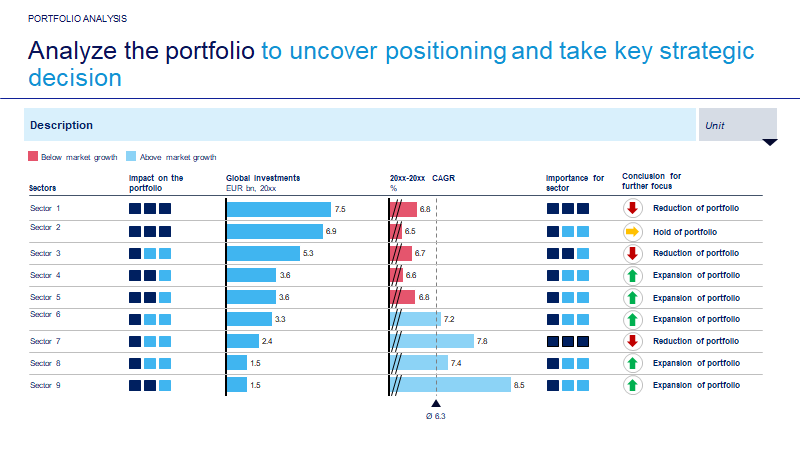
Example of Exective Summary Template
B. When to use an Issue Tree?
Use an Issue Tree when:
- you want a structured discussion rather than a brainstorming session
- you need to explore the solution space methodically
- you want to define the questions you must answer to validate an approach
- you need to focus research and information gathering on what matters
Don’t use an Issue Tree to:
- define the problem boundaries (use a Problem Tree or problem definition first)
- jump into solutions when the problem is still unclear
C. How to Build an Issue Tree (Step-by-Step)?
Step 1: Ensure the problem is clearly defined
- Before you ask “How could we solve it?”, confirm you’re solving the right thing.
- If possible, start from:
- a short written problem definition, and/or
- an existing Problem Tree or Hypothesis Tree
Step 2: Write the top question (“How could we…?”)
- Examples:
- “How could we increase revenue?”
- “How could we ensure potable water for everybody?”
Step 3: Add first-level options (2–5 branches)
- These should be big, distinct buckets that together answer the question.
Step 4: Drill down one level at a time
- For each branch, ask again: “How could we do this?” Then list MECE sub-options
Step 5: Stop when the tree becomes actionable
- You can stop when:
- each leaf suggests a clear initiative, or
- you’ve identified the specific analyses needed to choose among options
D. Examples
Example of Exective Summary Template
Example of Exective Summary Template
E. Conclusion
An Issue Tree is a powerful tool when you want structured problem solving instead of chaotic brainstorming. By framing the challenge as a “How could we…?” question and breaking it down into MECE options, you create a logical map of solutions and the exact questions you need to answer to move forward. Used alongside a Problem Tree and hypothesis work, the Issue Tree becomes not just a diagram but a practical roadmap for analysis, decision-making, and clean project execution.